
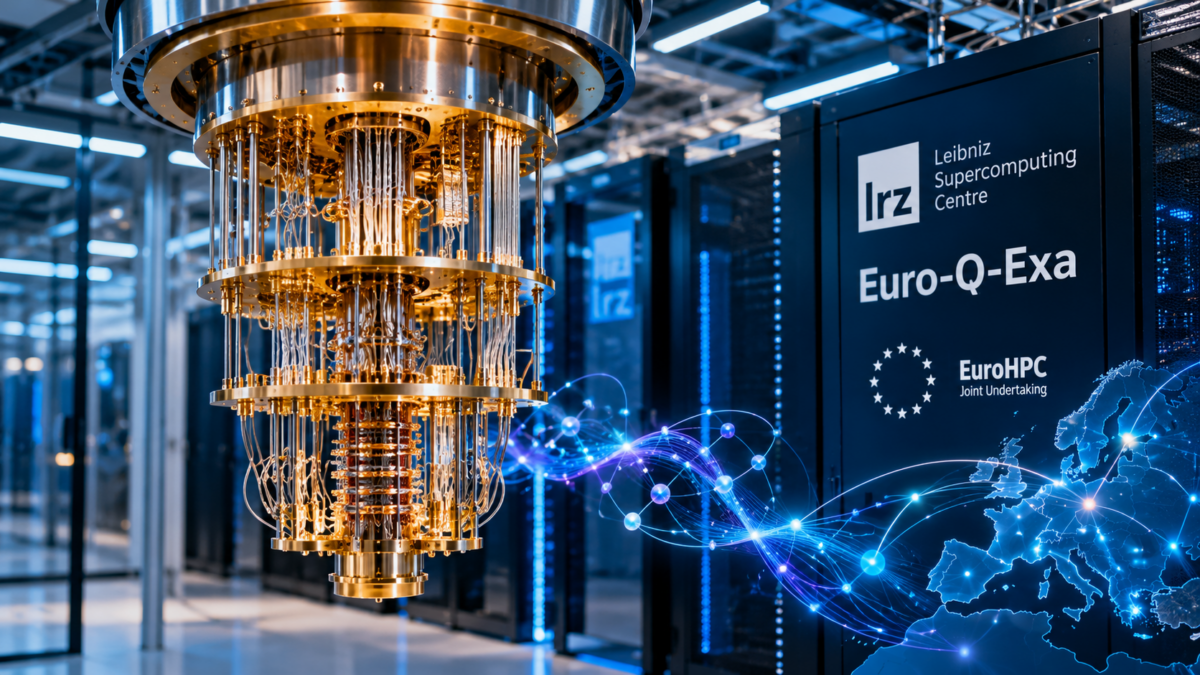
Europe Expands Its Quantum Computing Infrastructure: Euro-Q-Exa Enters a New Phase
The European quantum computer Euro-Q-Exa at Germany's Leibniz Supercomputing Centre (LRZ) is expanding. A new 150-qubit system will complement the existing 54-qubit installation, providing additional computing capacity for European researchers and businesses from 2027.
Quantum computing is one of the emerging fields of advanced computing technology. Unlike conventional computers, which process information using bits, quantum systems use qubits. Their unique properties offer new possibilities for investigating computational problems that are extremely challenging for traditional systems.
Europe is therefore gradually developing quantum computing infrastructure alongside its established supercomputing capabilities.
A New 150-Qubit System
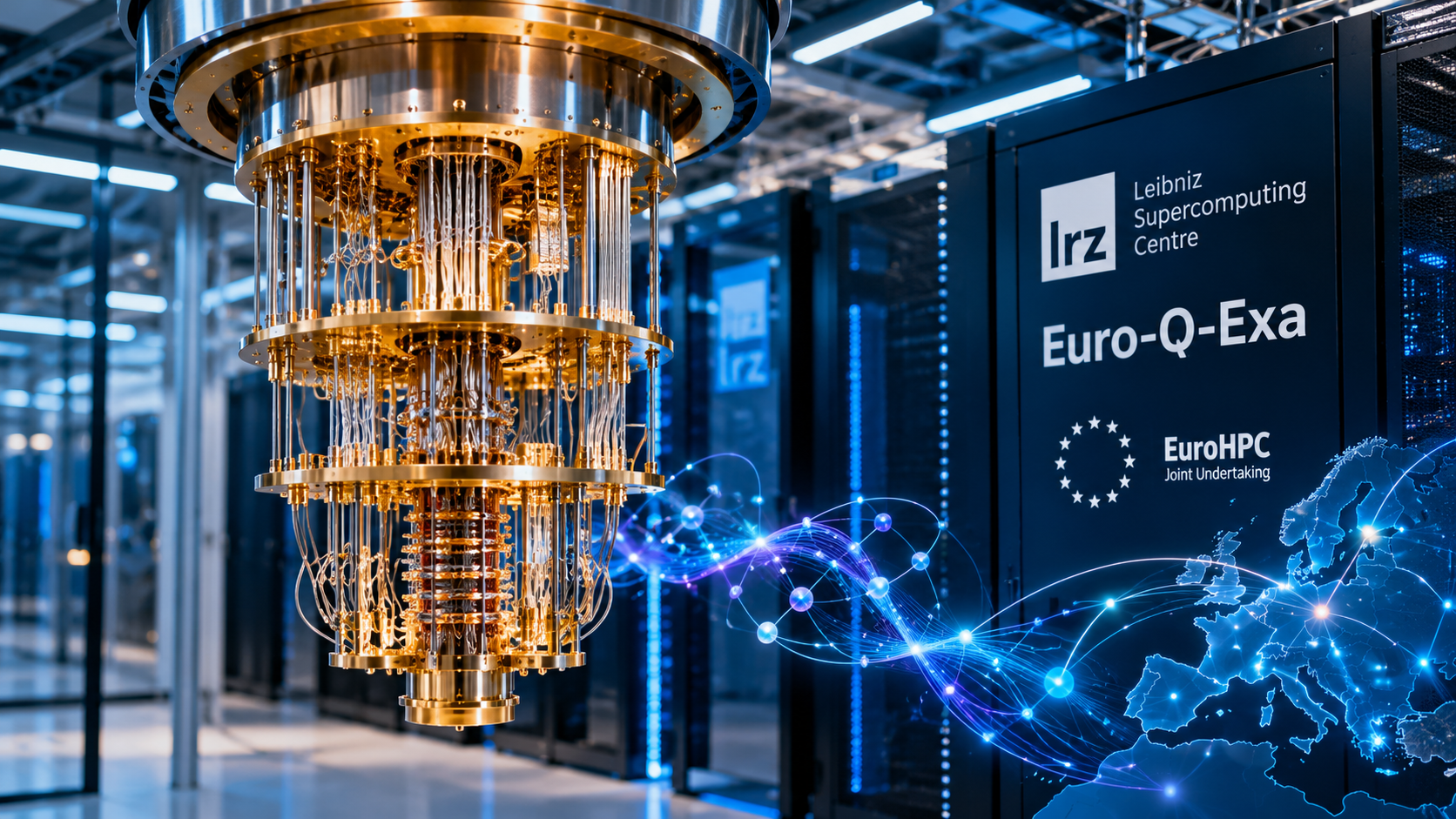
The next expansion phase of Euro-Q-Exa has begun at the Leibniz Supercomputing Centre in Germany. A new 150-qubit quantum computer will complement the existing 54-qubit system.
Both systems are based on superconducting quantum technology. IQM Quantum Computers is responsible for supplying and installing the new system.
Following installation, cooling, calibration and testing, the new equipment will be integrated into the LRZ infrastructure. Access for users is planned during 2027.
Computing Resources for Research and Industry
Euro-Q-Exa is not intended exclusively for academic research. Companies can also apply for free computing time to explore potential applications of quantum technologies.
Researchers and businesses from across Europe can request access through the EuroHPC Joint Undertaking.
Interest in the infrastructure is already growing. Since mid-September 2026, more than 37 teams from different scientific disciplines have been using Euro-Q-Exa's quantum computing resources.
Quantum Technologies Within Europe's Computing Ecosystem
Euro-Q-Exa forms part of Europe's broader effort to develop quantum computing capabilities and integrate them with high-performance computing infrastructure.
The project is funded by the European Commission, the relevant German federal ministry for research and technology, and the Bavarian Ministry of Science.
The expansion represents another step towards making advanced computing technologies accessible to European research institutions and businesses without requiring them to build expensive infrastructure of their own.
Source: HPCwire / LRZ, 12 October 2026
https://www.hpcwire.com/off-the-wire/lrz-euro-q-exa-enters-next-expansion-stage
 Perun Business Day by EuroCC: Discover the Potential of Supercomputing for Your Business 26 Oct - How can a supercomputer benefit your company? Come and see one of Europe's most powerful supercomputers up close and discover how high-performance computing and artificial intelligence can drive innovation, support product development, and optimise business processes.
 HPC Service Updates: Easier Access to Perun and AMS Software Now Available on Devana 25 Oct - We have two exciting updates for our HPC users: Open OnDemand is now available on both Devana and Perun, making access to our supercomputers easier than ever. In addition, the Amsterdam Modeling Suite (AMS) has been added to the software portfolio, opening up new possibilities for computational chemistry and materials science research.
 Better Batteries Through Computational Simulations: HPC Supports Advanced Materials Research 25 Oct - Developing more powerful, safer and longer-lasting batteries is one of today's major technological challenges. Researchers at Lawrence Livermore National Laboratory in the United States demonstrate how advanced computational modelling can improve our understanding of battery materials and help accelerate their development.