
Better Batteries Through Computational Simulations: HPC Supports Advanced Materials Research
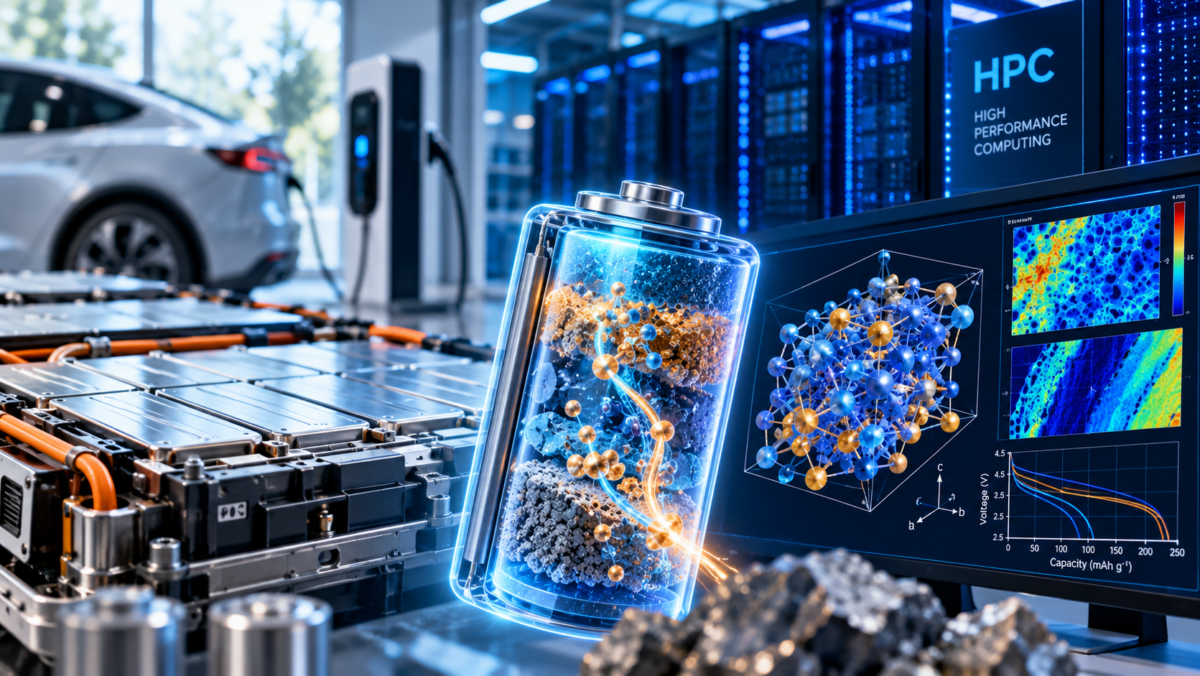
Developing more powerful, safer and longer-lasting batteries is one of today's major technological challenges. Researchers at Lawrence Livermore National Laboratory in the United States demonstrate how advanced computational modelling can improve our understanding of battery materials and help accelerate their development.
Batteries are essential components of modern technologies. They power mobile devices and electric vehicles and play an increasingly important role in storing energy generated from renewable sources. However, their performance, lifespan and reliability depend on numerous complex physical and chemical processes taking place within their materials. Traditional battery development therefore requires extensive experimentation, which can be both time-consuming and expensive.
Simulating Processes Inside Batteries
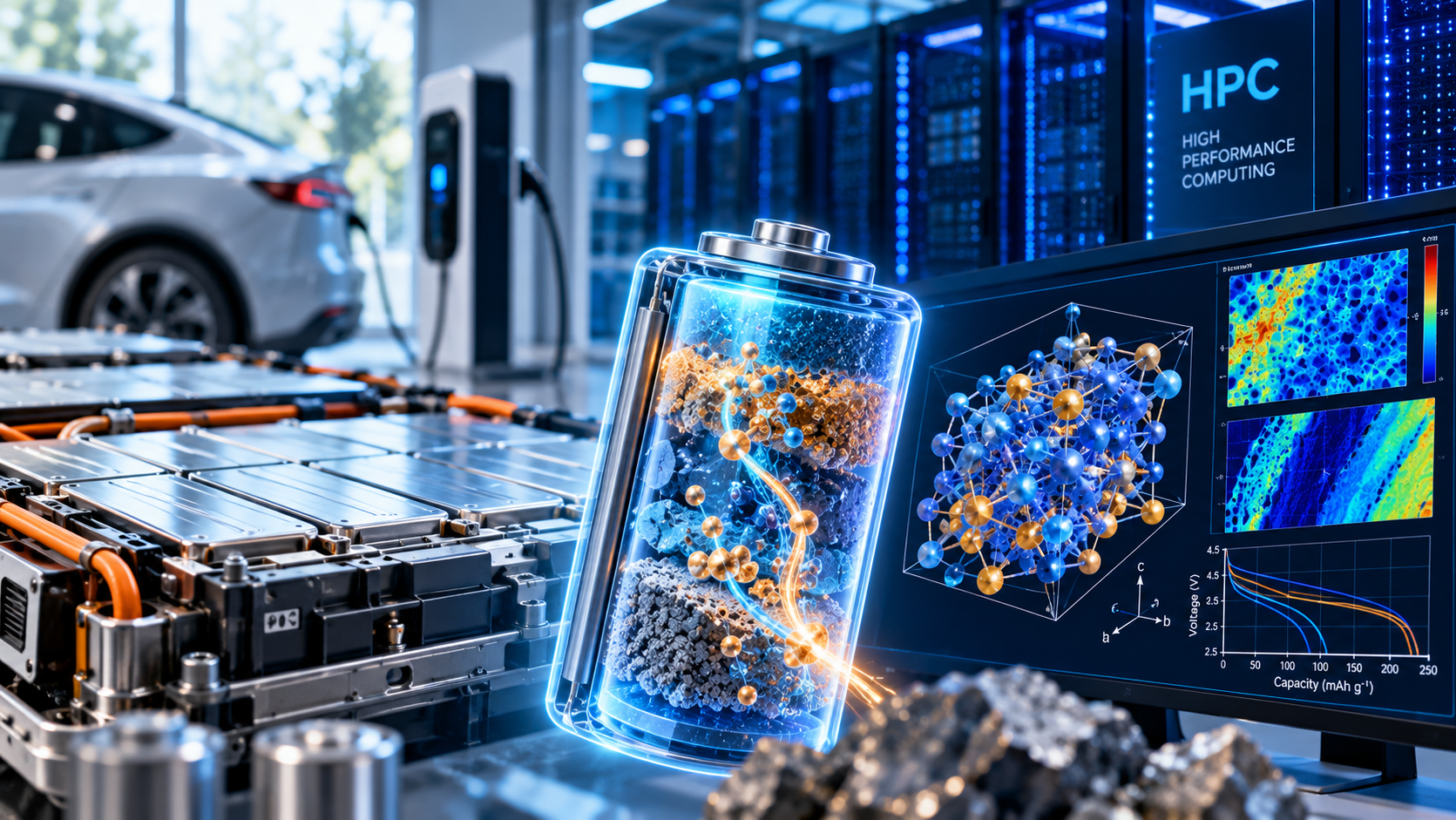
Scientists at Lawrence Livermore National Laboratory (LLNL) are investigating advanced modelling approaches for materials used in rechargeable batteries, with particular attention to single-crystal materials. These materials are of interest because their crystal structure influences their mechanical and electrochemical properties. Computational simulations help researchers investigate the relationships between material structure, behaviour during charging and discharging, and overall battery performance. This makes it possible to better understand the mechanisms contributing to material degradation and limiting battery lifespan.
Computational modelling does not replace laboratory experiments, but it can significantly complement them. It enables researchers to explore different material properties and operating conditions before conducting expensive physical tests, allowing experimental work to focus on more promising approaches. Advanced simulations also help connect knowledge across different scales, from processes within material structures to the behaviour of complete battery systems.
Computing Technologies Supporting Energy Innovation
These approaches highlight the importance of high-performance computing technologies for materials science and industrial innovation. The ability to simulate complex physical and chemical processes can accelerate the development of materials tailored to specific requirements. In the longer term, such research could contribute to improved battery technologies for electric mobility, portable electronics and large-scale energy storage.
Source: HPCwire / Lawrence Livermore National Laboratory, 23 February 2026
 HPC Service Updates: Easier Access to Perun and AMS Software Now Available on Devana 25 Oct - We have two exciting updates for our HPC users: Open OnDemand is now available on both Devana and Perun, making access to our supercomputers easier than ever. In addition, the Amsterdam Modeling Suite (AMS) has been added to the software portfolio, opening up new possibilities for computational chemistry and materials science research.
 Europe Expands Its Quantum Computing Infrastructure: Euro-Q-Exa Enters a New Phase 25 Oct - The European quantum computer Euro-Q-Exa at Germany's Leibniz Supercomputing Centre (LRZ) is expanding. A new 150-qubit system will complement the existing 54-qubit installation, providing additional computing capacity for European researchers and businesses from 2027.
 Digital Twin of the Earth: European Supercomputers Help Prepare for Climate Change 25 Oct - Europe's Destination Earth initiative has reached an important milestone. Researchers have released a new generation of climate simulations that provide more detailed insights into climate change and its potential impacts. The demanding computations are powered by European supercomputers, including LUMI and MareNostrum 5.