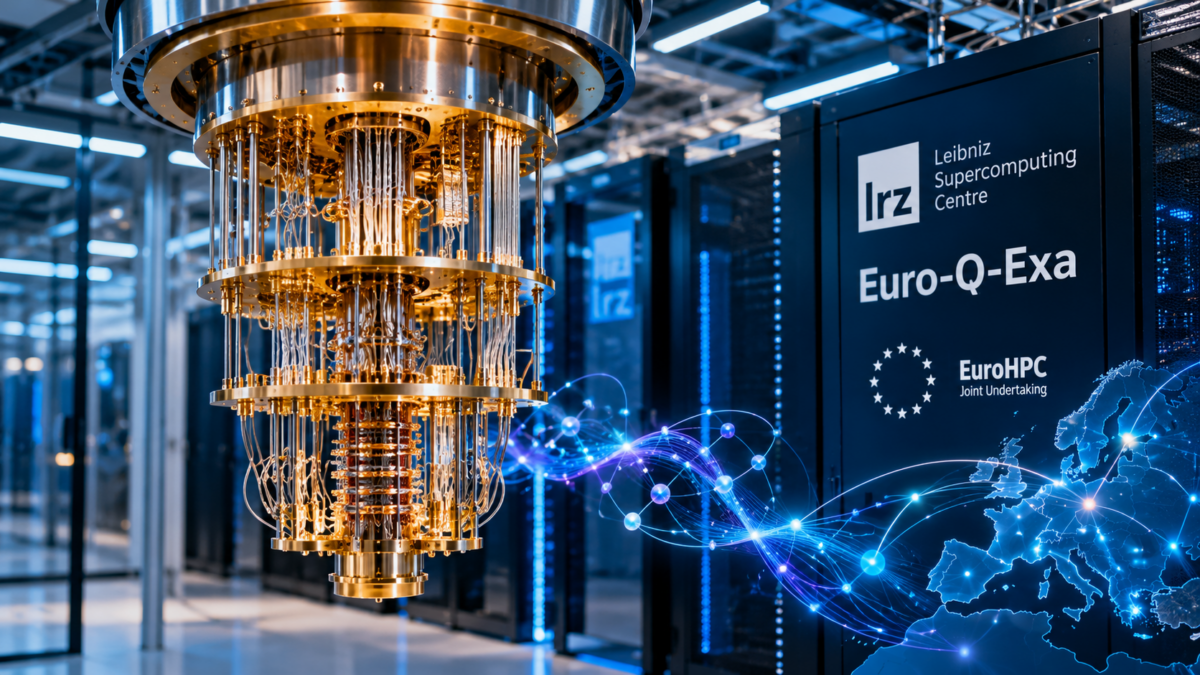
Europe Expands Its Quantum Computing Infrastructure: Euro-Q-Exa Enters a New Phase
The European quantum computer Euro-Q-Exa at Germany's Leibniz Supercomputing Centre (LRZ) is expanding. A new 150-qubit system will complement the existing 54-qubit installation, providing additional computing capacity for European researchers and businesses from 2027.
Quantum computing is one of the emerging fields of advanced computing technology. Unlike conventional computers, which process information using bits, quantum systems use qubits. Their unique properties offer new possibilities for investigating computational problems that are extremely challenging for traditional systems.
Europe is therefore gradually developing quantum computing infrastructure alongside its established supercomputing capabilities.
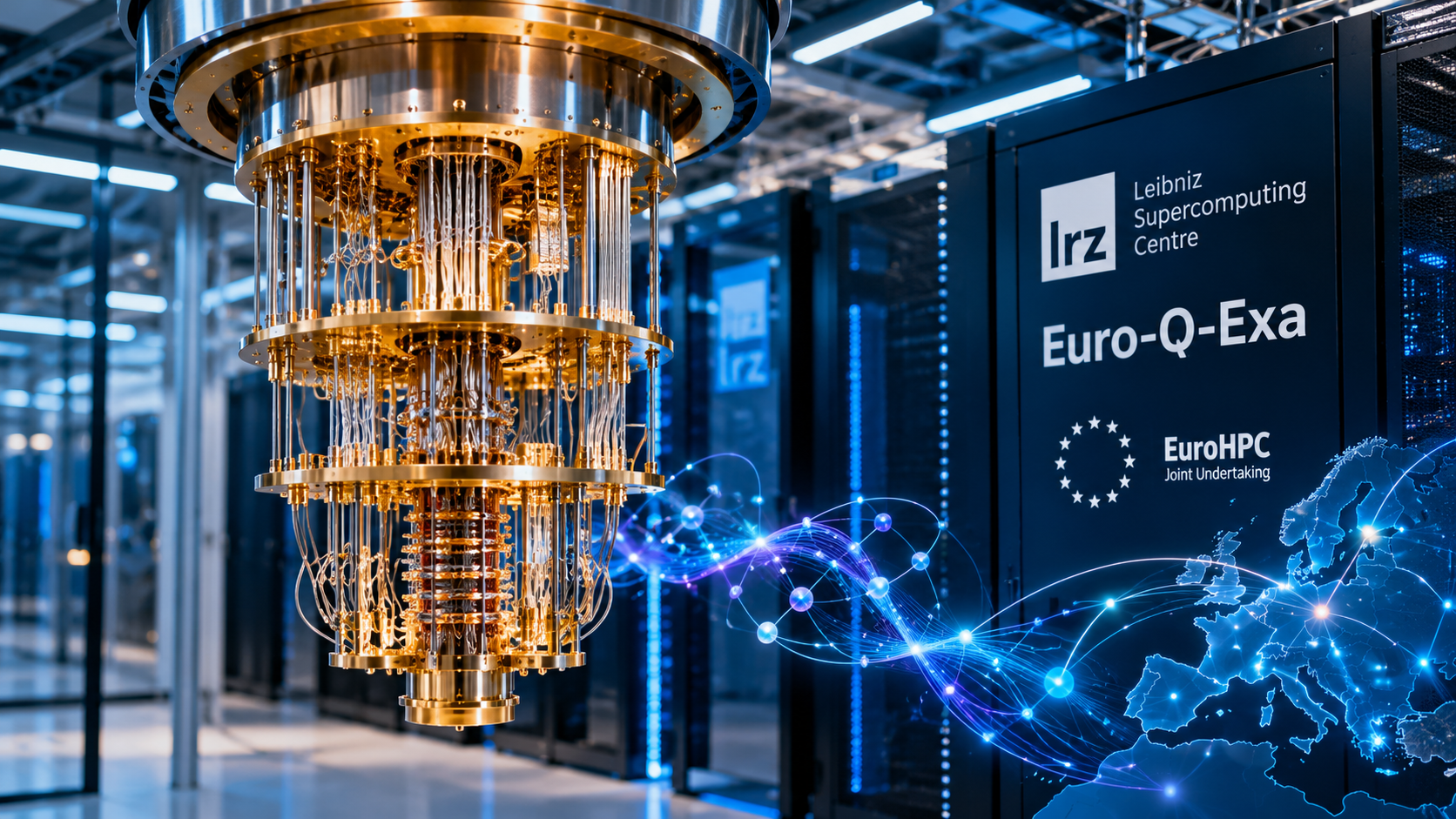
A New 150-Qubit System
The next expansion phase of Euro-Q-Exa has begun at the Leibniz Supercomputing Centre in Germany. A new 150-qubit quantum computer will complement the existing 54-qubit system.
Both systems are based on superconducting quantum technology. IQM Quantum Computers is responsible for supplying and installing the new system.
Following installation, cooling, calibration and testing, the new equipment will be integrated into the LRZ infrastructure. Access for users is planned during 2027.
Computing Resources for Research and Industry
Euro-Q-Exa is not intended exclusively for academic research. Companies can also apply for free computing time to explore potential applications of quantum technologies.
Researchers and businesses from across Europe can request access through the EuroHPC Joint Undertaking.
Interest in the infrastructure is already growing. Since mid-September 2026, more than 37 teams from different scientific disciplines have been using Euro-Q-Exa's quantum computing resources.
Quantum Technologies Within Europe's Computing Ecosystem
Euro-Q-Exa forms part of Europe's broader effort to develop quantum computing capabilities and integrate them with high-performance computing infrastructure.
The project is funded by the European Commission, the relevant German federal ministry for research and technology, and the Bavarian Ministry of Science.
The expansion represents another step towards making advanced computing technologies accessible to European research institutions and businesses without requiring them to build expensive infrastructure of their own.
Source: HPCwire / LRZ, 12 October 2026
https://www.hpcwire.com/off-the-wire/lrz-euro-q-exa-enters-next-expansion-stage
 Nová výzva FFplus: Hľadáme projektových partnerov – až 200 000 € na HPC inovácie vo firmách 23 Nov - Representatives of the Slovak Academy of Sciences (SAS) attended the Three Seas Digital Forum on 12 November 2026, marking the opening of the fifth edition of the Poznań Economic Congress in Poland. Dedicated to the digital future of Central and Eastern Europe, the event provided a platform for discussions on regional competitiveness, technological innovation, and opportunities for stronger cross-border cooperation.
 Perun Business Day by EuroCC: The PERUN Supercomputer Opens Its Doors to Slovak Businesses 22 Nov - Representatives of the Slovak Academy of Sciences (SAS) attended the Three Seas Digital Forum on 12 November 2026, marking the opening of the fifth edition of the Poznań Economic Congress in Poland. Dedicated to the digital future of Central and Eastern Europe, the event provided a platform for discussions on regional competitiveness, technological innovation, and opportunities for stronger cross-border cooperation.
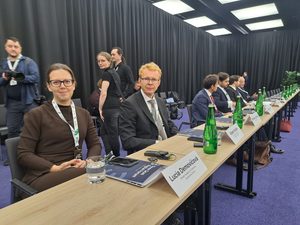 Slovak Academy of Sciences at the Poznań Economic Congress: New Opportunities for Cooperation in HPC and Artificial Intelligence 18 Nov - Representatives of the Slovak Academy of Sciences (SAS) attended the Three Seas Digital Forum on 12 November 2026, marking the opening of the fifth edition of the Poznań Economic Congress in Poland. Dedicated to the digital future of Central and Eastern Europe, the event provided a platform for discussions on regional competitiveness, technological innovation, and opportunities for stronger cross-border cooperation.